
Development Without Direction

When Mosquito Control Loses Its Public Health Logic
Ukulhas is developing.
That much is clear.
Infrastructure is expanding.
Tourism is growing.
Services are becoming more visible.
But development is not only about doing more.
It is about doing things with reason, timing, and care.
Mosquito fogging is a necessary public health tool.
What is unfolding on the island, however, raises a quieter question:
Are we developing systems — or simply repeating actions without updating their logic?
What Is Being Observed
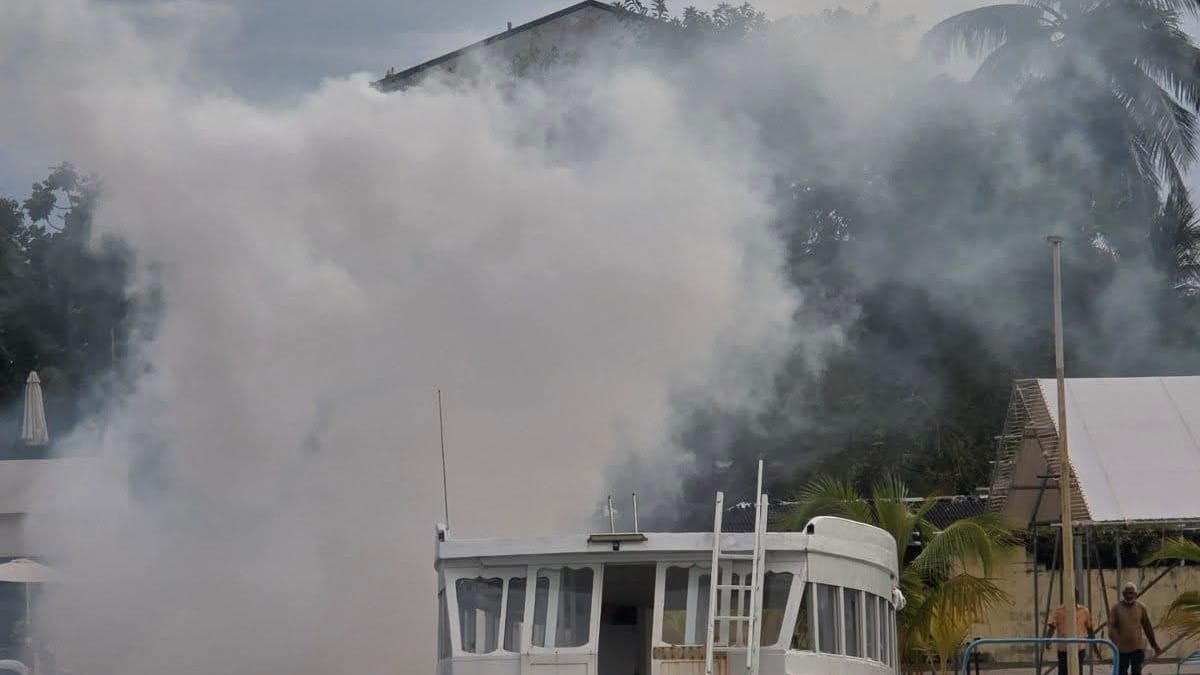
In recent weeks, mosquito fogging on Ukulhas has been carried out between approximately 4:00 PM and 6:00 PM.
This is not a quiet window.
It is a time when:
- children are outdoors
- families gather in parks and streets
- tourists walk public pathways
- island life is fully active
During fogging:
- smoke density becomes extremely high
- visibility drops close to zero
- people continue moving through the fog
- no clear exclusion zones are visible
- no real-time public warnings are apparent
This is not an emergency situation.
It is a routine operation happening in a crowded environment.
That distinction matters.
What Official Guidance Already Says
Maldives mosquito control campaigns — including long-running public health programs — typically schedule fogging at dawn or dusk.
These timings are chosen for clear reasons:
- Aedes mosquitoes are most active around sunrise and sunset
- Weather conditions are calmer
- Fog disperses more evenly
- Human exposure is easier to limit
Equally important, official advisories instruct the public to avoid staying outdoors during fogging.
Fogging is effective only when exposure is controlled.
Where the Gap Appears
The concern on Ukulhas is not mosquito control itself.
It is the gap between guidelines and implementation.
Best practice requires:
- clearing streets and park before fogging
- keeping children away from treated areas
- providing advance warnings
- stopping or adjusting fogging if smoke becomes excessive
When fogging continues while:
- people remain present
- children are playing
- tourists are walking
- visibility collapses
the operation shifts from preventive health measure
to avoidable public exposure.
This is not an interpretation.
It is a mismatch of purpose and execution.
Health Is About How, Not Just What
WHO-approved insecticides are widely used across the world.
They are considered safe when applied correctly.
They are not designed to be inhaled directly,
nor to be released into dense crowds.
High fog density combined with difficulty breathing suggests:
- incorrect dispersion conditions, or
- poor timing, or
- lack of operational control
Children, pregnant women, elderly residents, and people with asthma are naturally more vulnerable.
Public health measures should reduce risk — not redistribute it.
Public Spaces Carry Special Responsibility
Fogging has occurred near:
- residential areas
- public park
- tourist walkways
Children playing outdoors:
- breathe more rapidly
- benches and equipment
- remain in close proximity to ground-level fog
No public space should become a testing ground for routine operations.
Especially not during peak hours.
Tourism Feels These Decisions First
Several visitors have expressed discomfort:
- sudden fogging without warning
- breathing difficulty
- inability to see or move safely
These moments may feel small locally,
but they shape how the island is remembered.
Tourism does not collapse from one incident.
It erodes from repeated signals that systems are not thinking ahead.
Why Early Morning Makes More Sense
Early morning fogging — before 6:00 AM — offers clear advantages:
- roads and park are empty
- children are indoors
- tourists are asleep
- mosquito activity is still high
- public exposure is minimized
There is no scientific requirement that fogging must happen during late afternoon if early morning conditions are available.
Choosing safer timing is not a technical challenge.
It is a planning choice.
This Is About Reason, Not Blame
Mosquito control is necessary.
No one disputes that.
But development without reasoning becomes routine without responsibility.
When actions continue simply because they are familiar — not because they are optimal — systems stop learning.
Ukulhas deserves better than that.
A Question Worth Asking
Development is not measured by how many actions we perform.
It is measured by whether our actions:
- protect children
- respect public space
- align with known guidance
- adapt as the island grows
If mosquito control is meant to protect health,
are we applying it in a way that actually does so?
And if not,
what does development mean
when logic is left behind?